Elisabeth Kley
Children’s Art Carnival in Harlem: The Making of Contemporary Artists,
Jun 26 – Sep 13, 2026
Current: Wallach Art Gallery, Columbia University
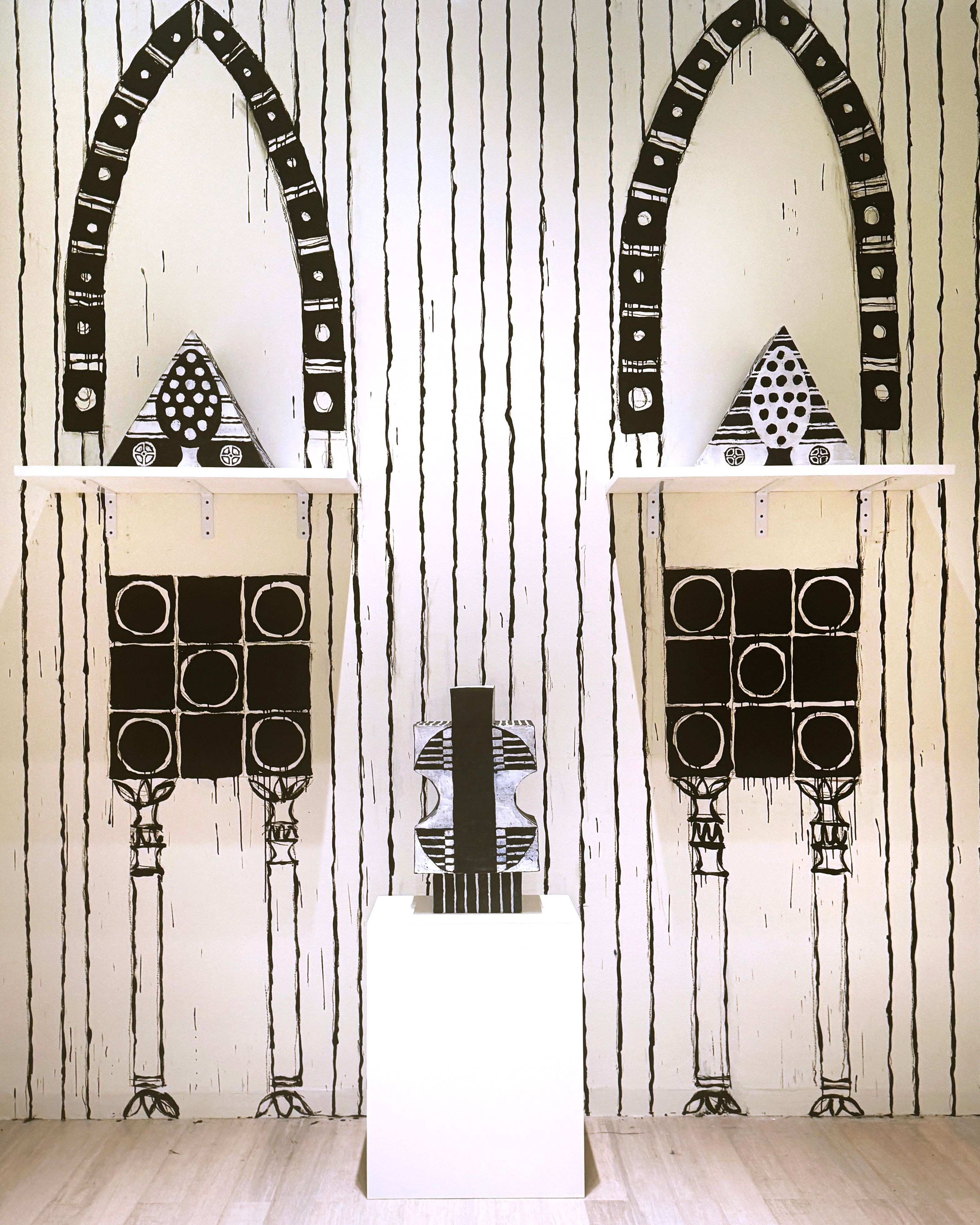
Harlem’s Children’s Art Carnival was an outgrowth of MoMA’s annual event-based art education series of the same name that had been established by MoMA’s founding Education Director, Victor D’Amico. In 1969, MoMA re-imagined the Carnival as a free outreach program in Harlem under the leadership of Betty Blayton-Taylor, an artist, educator, community activist, and co-founder of the Studio Museum. Blayton-Taylor’s vision for the Carnival harnessed the creative and political energy of the Black Arts Movement to provide children with critical arts education in schools and community spaces, develop influential arts-based educational models such as Creative Reading through the Arts, and foster empowerment and career pathways in communities severely impacted by systemic injustice and limited resources.
Like most of the Carnival’s teaching artists, Elisabeth Kley taught a range of projects, from puppetry to printmaking. It was the latter that resonated most deeply with her own artistic practice and introduced her to a new artmaking process. The project involved teaching the children to make prints using Styrofoam meat trays—an example of the Carnival’s inventive use of everyday materials. “I actually started making Christmas cards out of that same way,” she said. “And then I made more elaborate prints…that definitely stuck with me the most.”
After her years at the Carnival, the prints Kley made using the technique she learned there featured decorative patterns similar to those in this installation. This immersive, heavily geometric environment—composed of a mural and ceramic sculptures—draws from a range of historical sources, including Wiener Werkstätte, Sergei Diaghilev’s Ballet Russes dance company, and ancient Egyptian design. The latter influence is especially apparent in the pyramid-like sculptures on the shelves and the arches framing the works, suggesting the spiritual gravity and architectural grandeur of a temple.